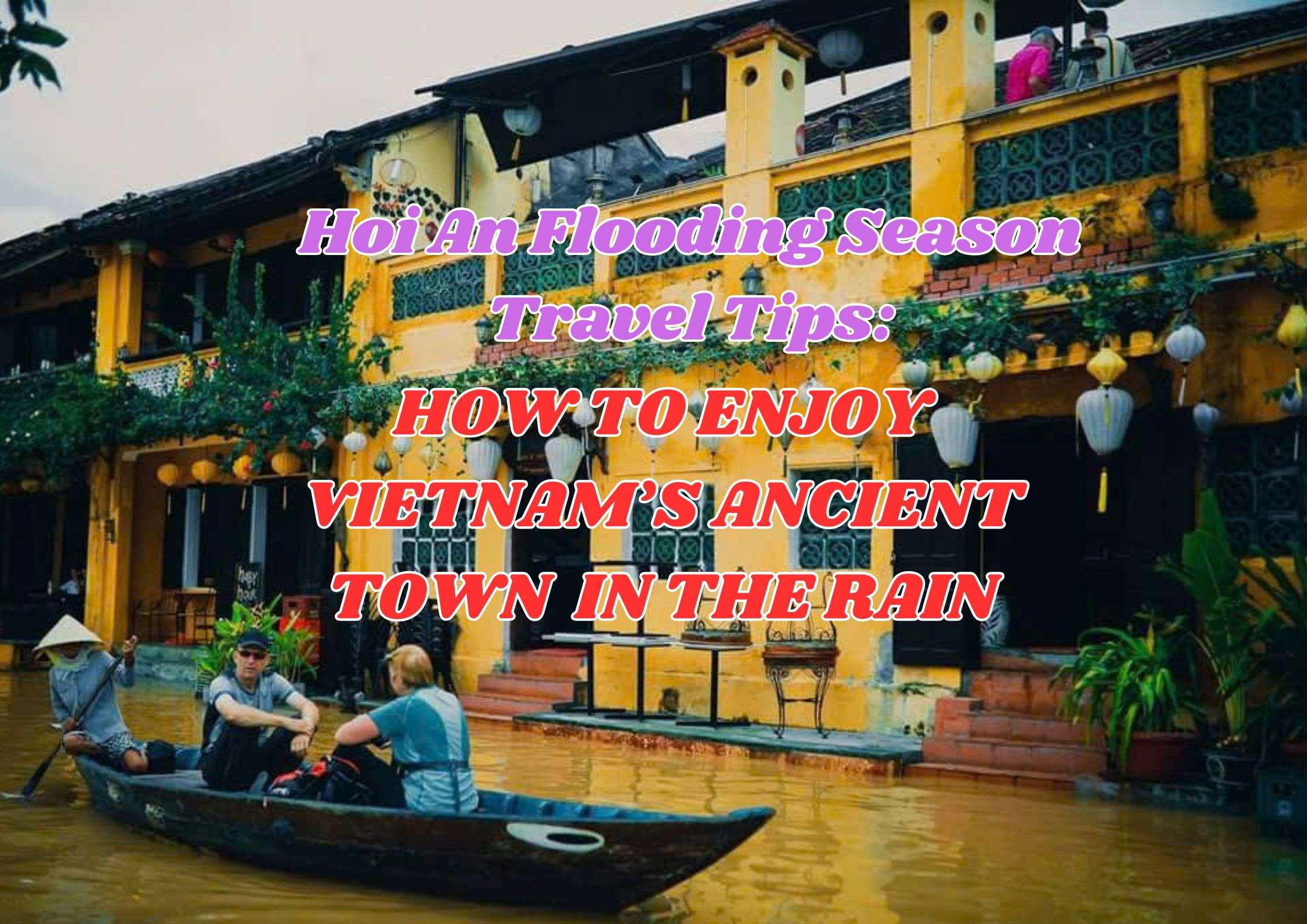
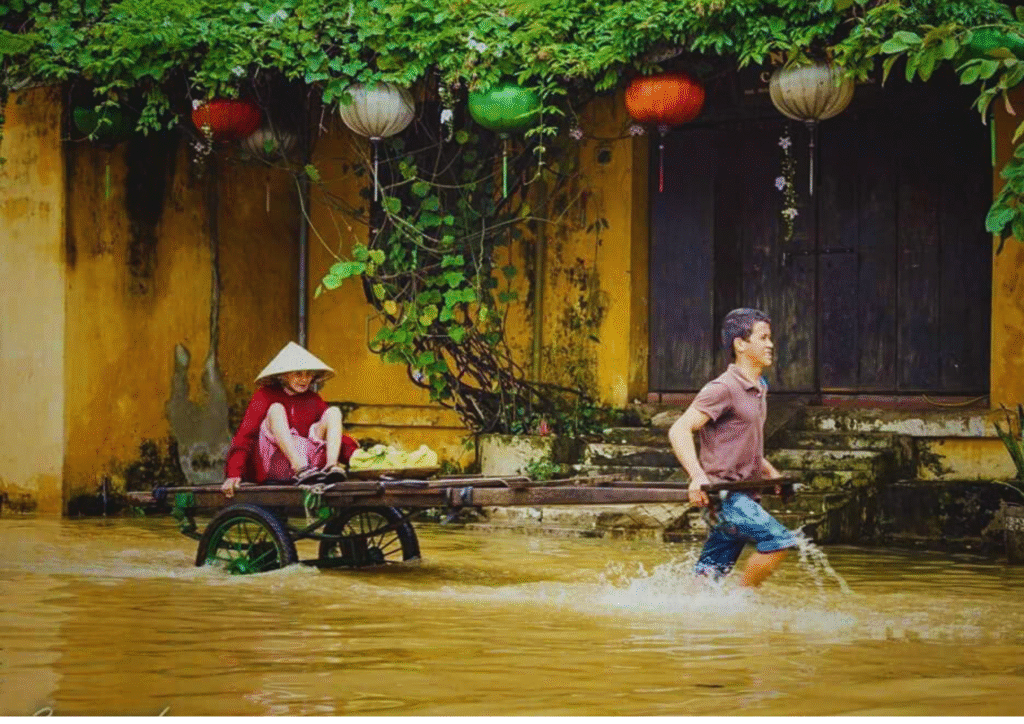
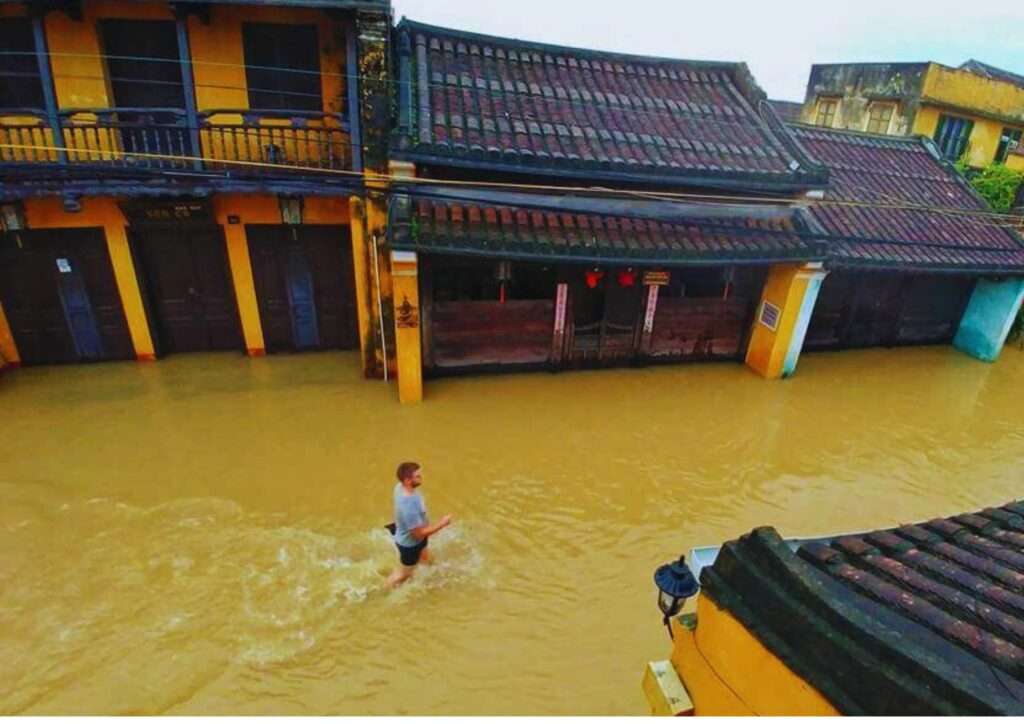
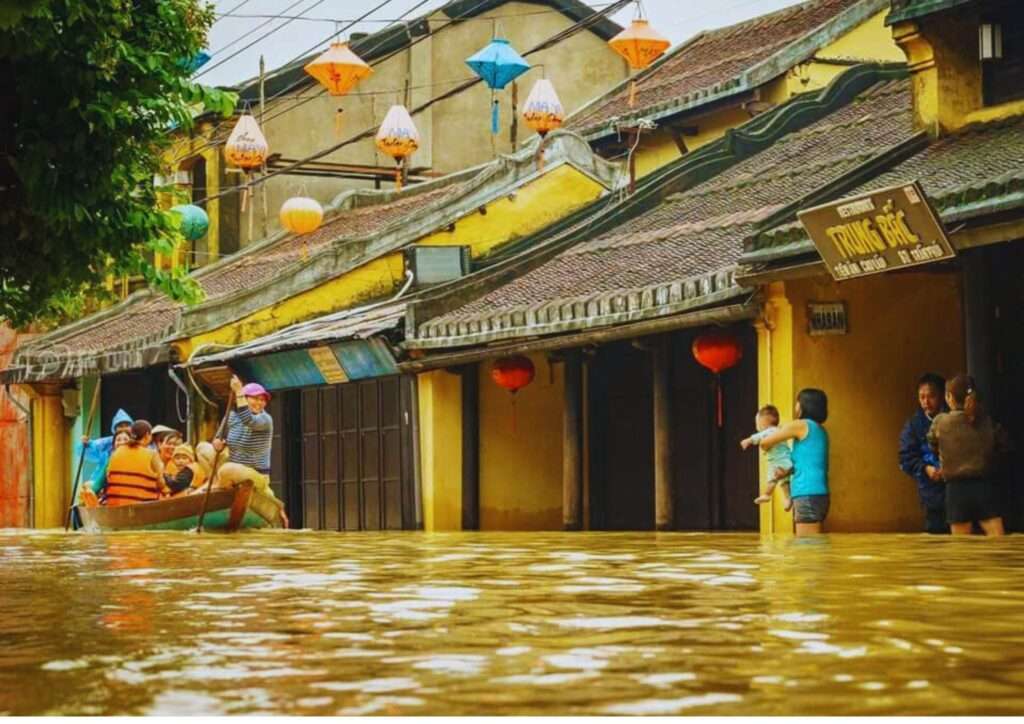
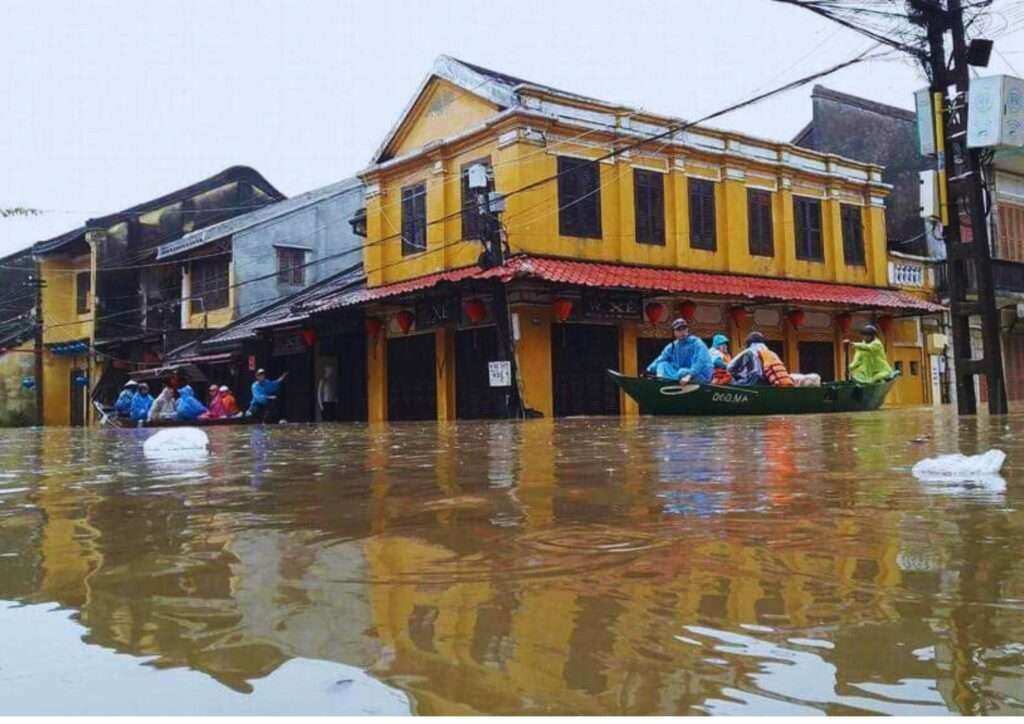
Every year, between October and December, the peaceful town of Hoi An transforms into a unique riverside world. The Thu Bon River, which runs through the Old Town, often overflows during the rainy season, flooding streets, shops, and temples — sometimes up to knee or waist level.
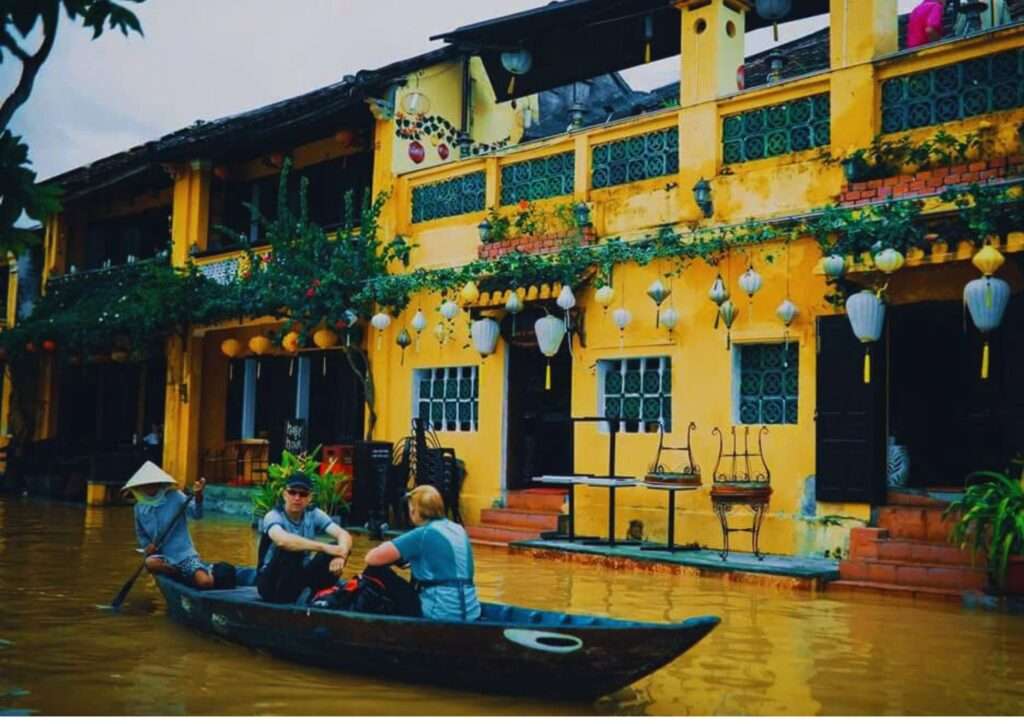
While that might sound alarming, the truth is: Hoi An’s flooding season has its own charm. Locals adapt easily, turning flooded streets into gentle waterways navigated by small wooden boats. The reflection of lantern lights on the water creates a scene straight out of a dream.
If you’re visiting Hoi An during this time, here’s everything you need to know to stay safe, dry (mostly!), and make the most of the experience.
☔ 1. When Is Flooding Season in Hoi An?
Hoi An’s rainy season usually starts from September to early January, with the heaviest rains in October and November.
The Thu Bon River rises quickly after continuous rainfall or upstream water release.
Flooding can last from a few hours to a few days, depending on the weather.
💡 Pro tip: Check local weather updates before your trip and be flexible with your schedule — heavy rain may change your plans, but it rarely ruins the trip.
🚤 2. Is It Safe to Visit Hoi An During the Floods?
Yes — it’s generally safe, as flooding is predictable and locals are well-prepared.
Power and water are usually stable in tourist areas.
Streets close to the river (like Bach Dang and Nguyen Thai Hoc) may be submerged, but you can still access most cafes, tailors, and restaurants on higher ground.
Locals even offer boat rides through the flooded streets, giving travelers a once-in-a-lifetime photo opportunity.
💬 Local insight: Residents often say, “Hoi An looks even more magical when it’s underwater.”
🧳 3. What to Pack for the Rainy Season
If you’re visiting between October and December, come prepared:
Waterproof sandals or flip-flops – streets can get muddy.
Light raincoat or poncho – easy to find in local markets.
Dry bag or waterproof phone case – protect your valuables.
Extra socks & quick-dry clothes.
Mosquito repellent—humidity brings them out.
💡 Tip: Many hotels provide umbrellas or raincoats for guests—just ask the front desk.
🍜 4. Things to Do in Hoi An During the Flooding Season
Don’t worry—rain doesn’t mean boredom! Here’s what you can still enjoy:
1. Café hopping in the Old Town: Warm up with a Vietnamese coffee or hot tea while watching the rain fall over lantern-lit streets. Try Faifo Coffee, The Hill Station, or Hoi An Roastery.
2. Take a boat ride through flooded streets: Locals offer short rides through the submerged areas — it’s a surreal, peaceful experience and great for photos.
3. Visit tailor shops: Rainy days are perfect for getting custom clothes made—it usually takes 1–2 days.
4. Explore museums and art galleries: Stay dry while learning about Hoi An’s history and culture at the Hoi An Museum or Precious Heritage Gallery.
5. Join a cooking class: Indoor, cozy, and fun! Learn to cook local dishes like Cao Lau and White Rose dumplings.
🏨 5. Where to Stay During Flood Season
If visiting during flood-prone months, choose accommodation slightly outside the Old Town — near An Hoi Island, Cam Pho, or Cam Chau Ward. These areas are still close to the center but less likely to flood.
💡 Tip: Check recent reviews before booking; travelers often mention if the hotel area was affected by floods.
📸 6. Photography Tips for Rainy Days
Hoi An in the rain is stunning for photography.
Shoot during light rain or mist for reflections on the wet streets.
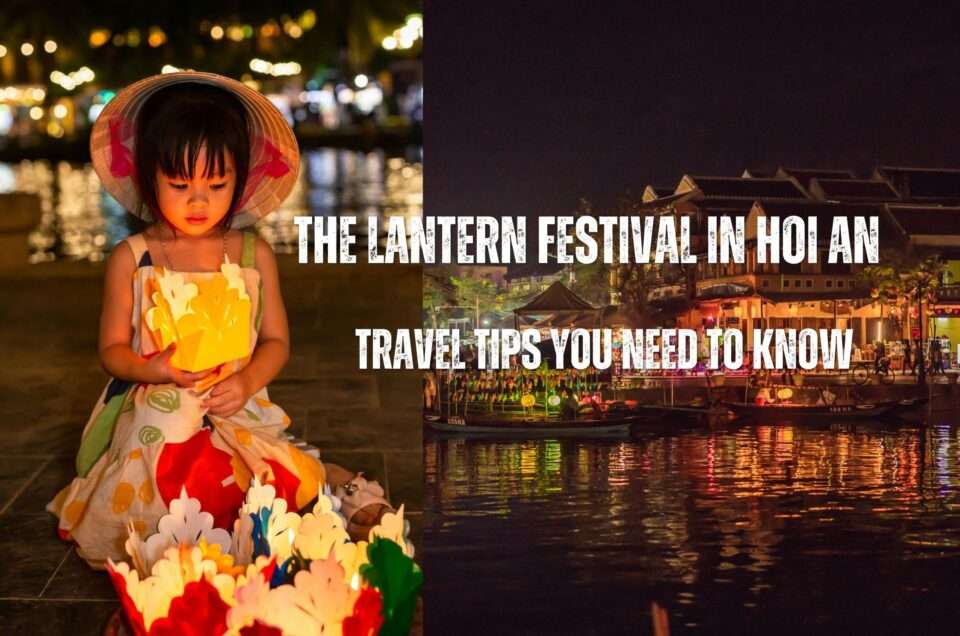
Evening photos with lanterns glowing on floodwater look magical.
Use a clear umbrella or rain cover for your camera.
“Even in the rain, Hoi An shines its brightest light.”
🛶 7. Local Etiquette & Respect
Remember that flooding affects daily life for residents.
Always ask permission before taking photos of locals.
Don’t block traffic when taking pictures near flooded zones.
Support small businesses—buy a meal, coffee, or souvenir to help the community.
🌤️ 8. The Upside of Visiting During Flood Season
Visiting during the rainy season also has its perks:
Fewer tourists mean peaceful streets.
Lower hotel prices and great deals.
A more authentic, local experience of Hoi An’s resilient charm.
And when the water recedes, everything returns to normal within a day or two — ready for you to explore again.
🌅 Conclusion: Embrace the Unexpected
Hoi An’s flooding season may sound inconvenient, but it’s also one of the most poetic times to visit. Lanterns floating on water, reflections of yellow ancient houses, and the calm pace of life create a scene unlike anywhere else in Vietnam.
So, bring your raincoat and sense of adventure — because even in the rain, Hoi An never loses its magic.